
Supplements that actually work (and what to avoid!)
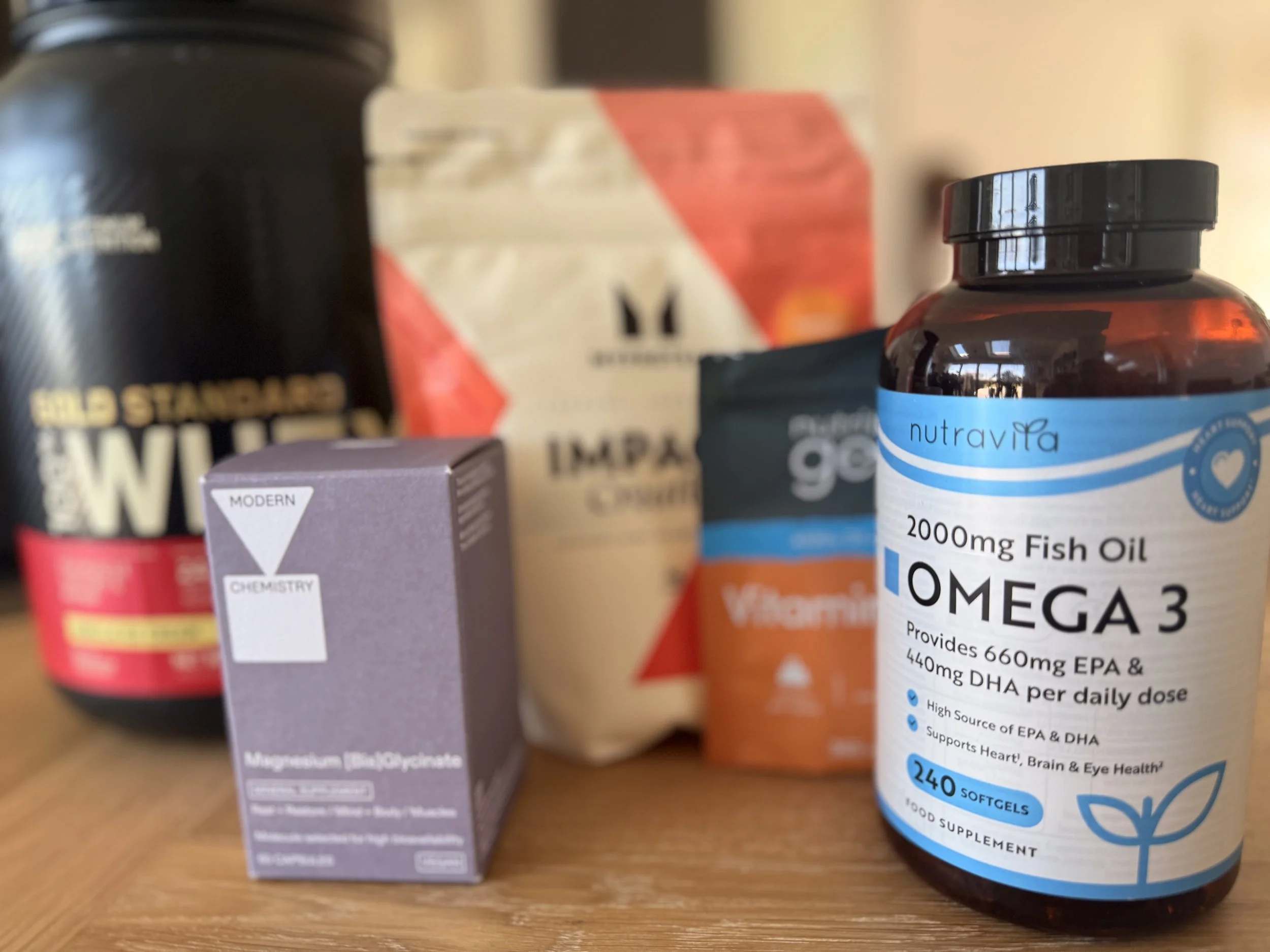
An honest guide from a nutrition coach on what’s actually worth your money.
Most supplements are solving problems you don’t have.
Walk into any supplement shop and you’ll find something for every problem you could think of: better skin, optimised hormones, perfect sleep, fat loss…
Before you know it, you’re spending £100+ a month on things that are doing very little (if anything). I’ve coached enough clients to know that the ones who get results aren’t the ones spending £100 a month on supps, it’s the ones nailing the basics (protein, calories; sleep, consistency) that get results.
That’s exactly what I focus on with my 1:1 Principal Nutrition coaching in Nottingham - getting those fundamentals right before adding anything on top.
The reality is that people only need 4–5 supplements max, and everything else is just noise.
The ones I rate
Whey protein (or plant based alternative for vegan)
If you’re hitting your protein targets through food alone, you don’t actually need this one. But most people aren’t hitting their protein targets. Whey is one of the easiest and most convenient ways to increase your protein. It’s relatively cheap and easy to add to shakes, porridge, protein pudding.
Creatine
The most researched supplement out there. Helps your muscles produce more energy during high intensity efforts, lifting heavier, recovering faster between sets and doing more work overall. Just get basic creatine monohydrate (the cheap one works!)
Omega 3
Most people don’t eat enough oily fish to get what they need. Good for joint health, brain function, cardiovascular health and helps manage inflammation. Get a good quality one.
Vitamin D
1000% needed for us in the UK where the sun disappears for most of the year. Around 60% of people are deficient and it affects mood, energy, immunity and performance. Especially important in autumn & winter - and it’s cheap.
Magnesium
Worth considering, especially if sleep or recovery isn’t great. Helps with muscle relaxation and sleep quality, & magnesium bisglycinate (glycinate) is your best bet - well absorbed and gentle on the stomach. Not magic, but a good addition if the rest of the basics are in place.
The ones I’d leave on the shelf
BCAAs
If you are eating enough protein (which you should be), these have no place in your diet. It’s an expensive way to do absolutely nothing. If you aren’t eating enough protein, fix that with actual protein.
Collagen
The most hyped supplement of the moment, you can’t move on Instagram without seeing a post or an advert about collagen, the evidence and research supporting any of the claims is less impressive (especially given it costs £££). Eat enough protein or supplement using whey, do your strength training and get your micronutrients in and you’ll have this one covered
Electrolytes
Another popular one at the minute. Unless you are training for hours in the heat and sweating heavily, you do not need an electrolyte supplement. For the vast majority of people doing an hour in the gym, water is fine. The expensive electrolyte powders are largely solving a problem you don’t have.
Multivitamins
Most multivitamins contain small doses of a wide range of nutrients - often not enough to make a real difference, and including things you’re already getting from food if you’re eating a diet which includes a variety of fruit and veg.
The short version
Whey (if you need to supplement protein)
Creatine
Omega 3
Vitamin D (especially if you’re in the UK)
Magnesium
Everything else? Read the label, ignore the marketing, and ask whether you actually need it or whether you’ve just been convinced that you do.
If you’re spending more on supplements than you are on actual food, you’ve got it the wrong way round.
Nail the basics first, then add in what actually makes a difference.
If you want help with nutrition coaching in Nottingham, drop me a message using the form below.